Visit

www.timeintuscany.com Alvina from Podernouvo has agreed to write some posts about the food from Tuscany.

Simple Conversions - Liquids - 1 cup / 250 ml / 8 fl oz Solids - 20 g / 1/2 oz; 125 g / 4 oz; 500g / 1 lb C to F - 120C / 250 F; 180 C / 355 F ; 200 C / 390 F mm to in - 1cm / 1/2 in; 5cm / 2 in Boneless meat or chicken - 450g /1lb

Saturday, January 26, 2019

A perfect Aussie BBQ


BBQ / grill at Hill End Caravan Park NSW


We have a tendency to use the terms ‘barbecue’ and ‘grill’ interchangeably but in the US the BBQ refers to cooking for a long period at a low temperature, where meats, particularly tough cuts, soak up the smoke and marinade flavours to become very tender and moist. We do favour cuts such as Butterflied Lamb which is served pink and therefore is in between the two. However, grilling which is the opposite approach is most commonly used for everyday backyard cookout fare in Australia: ‘the method of cooking food hot and fast on the grill. “We’ve probably been brought up with the burnt sausage and well-done steak cooked on the barbecue,” Australasian Barbecue Alliance Co-Founder, Adam Roberts, said. “Whoever was doing the barbecue probably said, "That’s the way I like them when in reality they’ve just buggered it up.” ...

The Aussie barbecue has evolved; these days tong-wielding enthusiasts are embracing global
influences, turning down the heat, and transforming the humble backyard barbie into another excuse to pit mate against mate in healthy competition. The final touch which remains however, is a
handful of gum leaves in the fire for that dinky di (authenic) outback flavour.
Less heat, more time — it’s part culinary movement, part sport.
Extract - ALFRESHCO: foreshore flavour

On the other hand, Celebrity chef, Matt Moran, said a BBQ was about showcasing the best summer ingredients - a selection of Aussie beef, lamb and sausages, plus seafood.
"I think we're all pretty traditional on Australia Day.  Most Aussies like to keep it simple - I love the snag rolls with caramelised onions on freshly buttered baked bread roll - it's a memory and taste you can't beat.
 Daily Telegraph, Jan 20 - 'Australia Day 2019'

Caramelised onions 
These are wonderful served cold as an accompaniment to cold meats, pates and terrines or hot with grilled meats. They’re very easy to make at home – you simply cook the onions slowly to caramelise their natural sugars while the brown sugar and balsamic help the process along.

Heat 2 tbsp oil on a grill or in a large frypan over low heat. Add 3 large red or brown onions, sliced and a good pinch of salt and cook slowly for 15-20 minutes, stirring occasionally to prevent them from catching. Don’t be tempted to turn the heat up, as you don’t want the onions to burn. When onions are softened and tinged golden, add 2 tbsp brown sugar and 1-2 tbsp balsamic vinegar.
Cook over low heat for a further 5-10 minutes, stirring occasionally, until caramelised.
Recipe P170 - ALFRESHCO


A

Wednesday, January 23, 2019

MAN YOUR ESKY January 26 - Firing up the Barbie


Man your Esky!


Many countries have a long history of grilled meats, yet Aussies try to claim the BBQ as our own, where it’s considered traditional, if not sacred. The barbecue and sausage sizzle along with the truly Australian invention of the Esky, have become emblems of Australian hospitality with ‘Firing up the barbie’ practically a way of life...

A common factor uniting the barbecuing world, public or private, whether born in Australia or elsewhere, is that it’s the men who do the cooking. And as they do so, they talk.

Richard White, Australian historian and author of ‘Inventing Australia’ says, “Australian men aren’t known for their ease at social chat. Beyond the footy scores and house prices, even a soulless electric grill appears to have the ability to stir genuine yearning and conversation in the way a camp fire might once have done.”

Mark Thompson in ‘Meat, Metal, & Fire: The Legendary Australian Barbecue’ believes Aussie men fulfil their hunting and creative instincts in the ritual. At the end of the day, it’s mateship, the sharing of good food and casual relaxed moments that is an intrinsic part of our lifestyle. We can create a gourmet meal with all the trimmings, cooked to perfection, or just have a few chops and snags (sausages) maybe a bit charred; with bread; throw in some beer/wine and enjoy the day.
Extract from ALFRESHCO: foreshore flavour
   

Sunday, January 13, 2019

Pomegranate & walnut salad for Australia Day celebration

Pomegranates - Stephen Trebilcock

The pomegranate is one of the main fruits in Armenian culture (alongside apricots and grapes). Its juice is used with Armenian food, heritage, or wine. The pomegranate is a symbol in Armenia, representing fertilityabundance, and marriage. 
It is also a semi-religious icon.

Pomegranate  herb & walnut salad
A simple, elegant salad

Combine in a large bowl,  2 Lebanese cucumbers, diced small; 1/2 red onion, thinly sliced; 1/3 cup mint leaves, roughly chopped; 2 handfuls of spinach or rocket leaves. 

Use pomegranate dressing (see below)  or a red wine vinegar dressing, sprinkle with pomegranate seeds and a large handful of roasted walnuts

Pomegranate Dressing

Prepare 1 pomegranate by cutting it in half - juice one half to yield 1 tbsp juice after removing some of the seeds to retain with seeds from the other half.  Combine 3 tbsp extra virgin olive oil with 2 tsp pomegranate molasses, 1 tbsp pomegranate juice, a squeeze of lemon juice and season with salt and cracked pepper.

A substitute for pomegranate molasses which can be purchased from good supermarkets, 
Pomegranate molasses is traditionally used in Middle Eastern cuisine and has a distinct sweet and sour taste. It is also referred to as pomegranate syrup or pomegranate paste. Pomegranate molasses has gained popularity worldwide and is being used to give a new flavour to non-traditional dishes and drinks.

Top Substitutes

You can use various foods in place of pomegranate molasses. The top substitutes are cranberry concentrate;  balsamic vinegar with sugar; sweetened pomegranate juice syrup.  Add sugar to your taste.

Recipe - ALFRESHCO: foreshore flavour


It would be great to receive your feedback or suggestions. Click on "0 comments". You can choose 'anonymous' from the drop down menu if you don't have a google account. Or send an email - clara@babyboomerconnections.com.au

Monday, December 31, 2018

SLOWER | DEEPER | WISER to herald 2019

HAPPY NEW YEAR 

A few more images and sentiments borrowed from Michael Leunig 

 to herald 2019  (adding to 2018's greeting)

Best wishes and happy holidays

 Claire and Graham


HAPPY NEW YEAR to herald 2018

Reading

(Many good books)


Getting there

(Happy journey - maybe change direction to go with the tide?)


The night we lost our marbles

(Hopefully not on New Years Eve!)


ps - This is where I put food stuff so let me know if you would like to receive the occasional post.


Saturday, December 15, 2018

ALFRESCO / PICNIC IDEAS FOR THE HOLIDAYS


Great finger food

Caprese skewers are a novel way to present this simple salad and great for healthy finger food. 
The ingredients remain traditional ie fresh mozzarella, cherry tomatoes, and fresh basil. 
For the dressing, whisk 2 tbsp red wine vinegar, 1 tsp sugar or honey, 3 tbsp olive oil in a large bowl until combined. Add 8 cherry or grape tomatoes, 1 red onion, thinly sliced, 1 cup baby bocconcini and gently toss. Season with sea salt and freshly ground pepper and thread on skewers. For the dressing, whisk 2 tbsp red wine vinegar, 1 tsp sugar or honey, 3 tbsp olive oil in a large bowl until combined. Add 8 cherry or grape tomatoes, 1 red onion, thinly sliced, 1 cup baby bocconcini and gently toss. Season with sea salt and freshly ground pepper and thread on skewers. 
P 90 ALFRESHCO: foreshore flavour

Friday, October 26, 2018

‘ALFRESHCO - foreshore flavour’ finally delivered


Hi
There’s a saying that writing and publishing a book is like giving birth, especially at the end of the process when you just want to cross the finish line.  It has been a challenging journey with many hiccups, to say the least, but I’m happy that ‘ALFRESHCO  -  foreshore flavour’ ( my last book)  has finally been delivered


Celebrating the ‘produce providers’ of yesterday & today along our abundant foreshores and the innovators who have refreshed the Australian cuisine.
Foreshore flavours are explored, expressing the changing nature of today’s cuisine,with a focus on shared platters and eating alfresco.

I'm excited to say that it will be launched in late November, just in time for Summer alfresco eating.  In the meantime I'll be posting about some of the fresh food ideas from it.

 Clara


Saturday, October 13, 2018

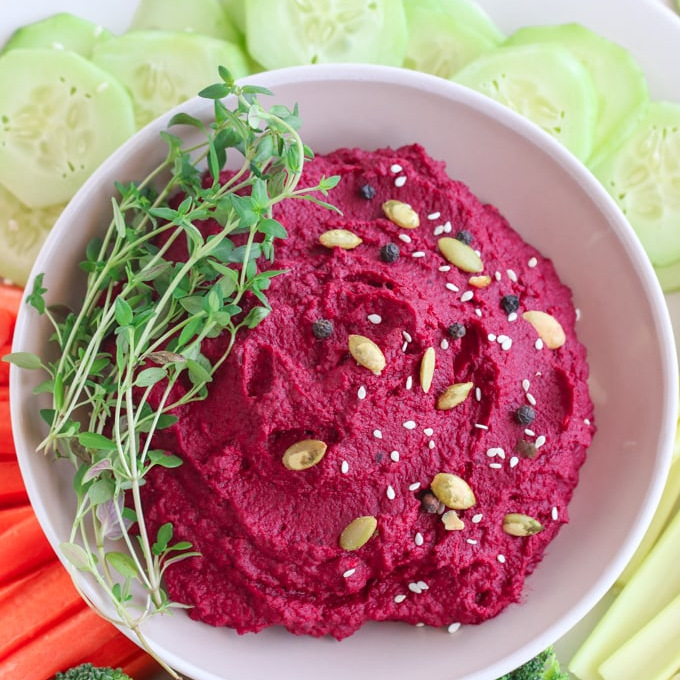
Beet and Hummus dip enlivens a Meza Plate


Colourful addition to a shared platter
Beet Hummus Dip

This quick, healthy dip can be made with pre-cooked or pre-roasted beets. Dukkah or Za'atar adds a Middle Eastern flavour.  Alternatively, roasted nuts and seeds of your choice or fresh herbs can be used.

Combine the following in a food processor until creamy but with some grainy texture.  If not using tahini you may need to add a little water.
1 can - 400g,
 chickpeas, drained & rinsed; 2 medium cooked, quartered beetroots; 2 cloves garlic, juice and zest from 1 medium lemon; 2 tbsp olive oil, 1/4 tsp salt, 1/2 tsp ground cumin, 2 tbsp tahini (optional even though it adds a lovely nutty flavour)


Sprinkle liberally with Dukkah or Za'atar. Serve with toasted flatbread or pita. 

Beetroot hummus will keep in the fridge, covered, for 4-5 days. 
ALFRESHCO Hint


What is the difference between Za'atar and  Dukkah?


Dukkah

Za'atar is a mix of crushed herbs like oregano, thyme and toasted sesame seeds with added sumac or marjoram. This is delicious over hummus, beans, eggs or vegetables. 
Dukkah is a textural treat blending nuts such as pistachio, hazelnut or almond  with cumin, toasted sesame and coriander seeds for a little kick.

Monday, September 24, 2018

Fabulous Asian finger food in Vietnam

Hi from Vietnam
I loved the simple food - very little meat compared with the vegetables and with subtle Asian flavours of lemongrass with chilli allowing the essence of the produce to shine through.  

Also loved the traditional spicy side dishes, which can transform an ordinary dish such as an omelette at breakfast into the sublime.

I've dug up my Womens Weekly Vietnamese cookbook from the past and am revisiting some amazing tastes.  Clara


Despite the varied landscape of Vietnam, all of the cuisine contains this brilliant balance of aromatics, heat, sweetness, sourness, and fish-sauciness. As with other Asian cuisines, it's all about the yin and yang; the sweet and the salty, the cooling and the warming, the fresh and the fermented.
The food of the north is heavily influenced by China with its stir-fries and noodle-based soups. As you move south, there's more flavour-blending with nearby Thailand and Cambodia. The tropical climate down south also sustains more rice paddies, coconut groves, jackfruit trees, and herb gardens. The food in southern Vietnam is typically sweeter: sweeter broths for pho, more palm sugar used in savoury dishes, and those popular taffy-like coconut candies made with coconut cream. A basic introduction to Vietnamese food by Erin Zimmer

Ha Long Bay overnight stay on a junk
Working up an appetite for breakfast and lunch 

First of many amazing spring rolls made
on the boat. Wonderful presentation. 


Street food tour in Hanoi - pork with crackle - seriously good!


Hunting  and gathering 


Local Saigon prawns -
 a delicacy when pickled and bottled. 
Coconut sweets and wine etc
Snake wine, bravely tasted by me.  Tasted like Grappa
 and would be good for cleaning the silver.
Ok with snake around my neck until it MOVED!!!

Safe food and good Australian wine also available!!
Lovely holiday thanks.


Monday, August 6, 2018

A thought for our drought stricken farmers

Dry clay bed


Recurrent natural cycle of droughts, floods and bushfires in rural Australia in the early 20th Century as seen through the eyes of ‘Hanrahan’, a pessimist farmer of Irish descent.


SAID HANRAHAN   (Abridged version)

"We’ll all be rooned,” said Hanrahan,
In accents most forlorn,
Outside the church, ere Mass began,
One frosty Sunday morn.

The congregation stood about,
Coat-collars to the ears,
And talked of stock, and crops, and drought
As it had done for years.

“It’s lookin’ crook,” said Daniel Croke;
“Bedad, it’s cruke, me lad,
For never since the banks went broke
Has seasons been so bad.”…

And so around the chorus ran
“It’s keepin’ dry, no doubt.”
We’ll all be rooned,” said Hanrahan,
“Before the year is out.”…

In God’s good time down came the rain;
And all the afternoon
On iron roof and window-pane
It drummed a homely tune…

It pelted, pelted all day long,
A-singing at its work,
Till every heart took up the song
Way out to Back-o’Bourke.

And every creek a banker ran,
And dams filled overtop;
“We’ll all be rooned,” said Hanrahan,
“If this rain doesn’t stop.”…


And stop it did, in God’s good time;
And spring came in to fold
A mantle o’er the hills sublime
Of green and pink and gold.

And days went by on dancing feet,
With harvest-hopes immense,
And laughing eyes beheld the wheat
Nid-nodding o’er the fence.

And, oh, the smiles on every face,
As happy lad and lass
Through grass knee-deep on Casey’s place
Went riding down to Mass.

While round the church in clothes genteel
Discoursed the men of mark,
And each man squatted on his heel,
And chewed his piece of bark.

“There’ll be bush-fires for sure, me man,
There will, without a doubt;
We’ll all be rooned,” said Hanrahan,
“Before the year is out.”
John O’Brian  1919
Alfreshco
 foreshore flavour

Eat   Talk   ShareWITH THANKS TO
The ‘produce providers’ of yesterday and today,
and innovators who have refreshed the Australian cuisine.

Without Great Produce, There Can’t Be Great Food


Friday, April 27, 2018

COOKING WAS THE WAY MY MOTHER SHOWED LOVE

 “My earliest food memories are when I was probably about four, in a rambling old house which Dad was renovating. Endless happy hours were spent on the swing suspended from the walnut tree — that is when we weren’t eating the garden produce. This consisted of a glorious bounty of fruit trees: apples, peaches, apricots, gooseberries. I still recall our red stained fingers and mouths as we devoured raspberries warmed by the summer sun and the taste of sun ripened tomatoes from the vine.  

Mum made all her own jams, chutneys, pickles and bottled fruit and Dad was pretty good at it too, his pickled mushrooms being my favourite.There was always a fragrant offering simmering on the blackened top of the fuel stove, with cakes, biscuits, coconut ice, and amazing chocolate cake all appearing with miraculous regularity. Obviously Mum had a sweet tooth, so consequently struggled with her weight but cooking was her way of showing love. I was her greatest fan, praised for my enthusiastic efforts and held up as a fine example to my sister who had a poor appetite. 


It is therefore unsurprising that I have memories of some friends of my parents saying 
that I'd  make a good ‘front row forward’ due to my muscular frame and coverage. I had no idea what that meant but knew it wasn't what I wanted. Mum would constantly go on diets’ and I recall her often holding in her stomach and 
standing sideways in order to show the progress of the diet.

Early tastings 

“Bluff oysters are said to be the most flavoursome in the world because they are slowly grown in the cold, clean waters off the southern island of New Zealand. They would be collected from the rocks by the sackful. Dad would open an oyster and throw his head back to scull from the shell. Of course, I would do the same, in my role as intrepid taster; however I must admit to an initial sense of misgiving, reinforced by my sisters horror.

This brave act was followed up by the tasting of Mutton Bird valued by Māoris. The birds which are brined and stored in their fat, are said to taste like mutton with some describing the strong flavour as duck crossed with anchovies’ — not for the faint palated.

There was always a substantial garden, which would yield enough produce to sustain the family. Food scraps were dug into the soil without being composted, resulting in white eggshells being visible at times, looking as if there was a crop of eggs. However, this simple method resulted in soil fertile enough to even propagate new plants such as Chinese Gooseberries and Tree Tomatoes from the seeds of the eaten fruit.

Extract from my new book 'Alfreshco - foreshore flavour' to be published later this year.

Sunday, April 22, 2018

ANZAC biscuits survived all conditions

The wives and mothers of Australian soldiers first came up with the recipe for these biscuits during World War 1. The original ingredients were chosen because they didn’t spoil and didn’t need refrigeration: this means the biscuits are particularly good for picnics.


1½ cups traditional rolled oats, 1 cup plain (all-purpose) flour, 2/3 cup brown sugar, ¾ cup desiccated coconut, 1 cup golden syrup, 125g   butter, 1 tsp bicarbonate of (baking) soda, 2 tbsp boiling water.
Preheat oven to 160°C.

Place the oats, flour, sugar and coconut in a bowl and mix to combine. Place the golden syrup and butter in a saucepan over low heat and cook, stirring, until melted. Combine the bicarbonate of soda with the water and add to the butter mixture. Pour into the oat mixture and mix well to combine.

Place tablespoonfuls of the mixture onto baking trays lined with non-stick baking paper and flatten to 7cm rounds, allowing room to spread. Bake for 8–10 minutes or until deep golden. Allow to cool on baking trays for 5 minutes before transferring to wire racks to cool completely.


ANZAC DAY 


April 25th marks the day on which Australians come together to commemorate all men and women who fought for the country since the First World War –  it is the anniversary of the landing of the Australian and New Zealand Army Corps at Gallipoli in 1915. This year also marks 102 years since the first Sydney commemoration of ANZAC.